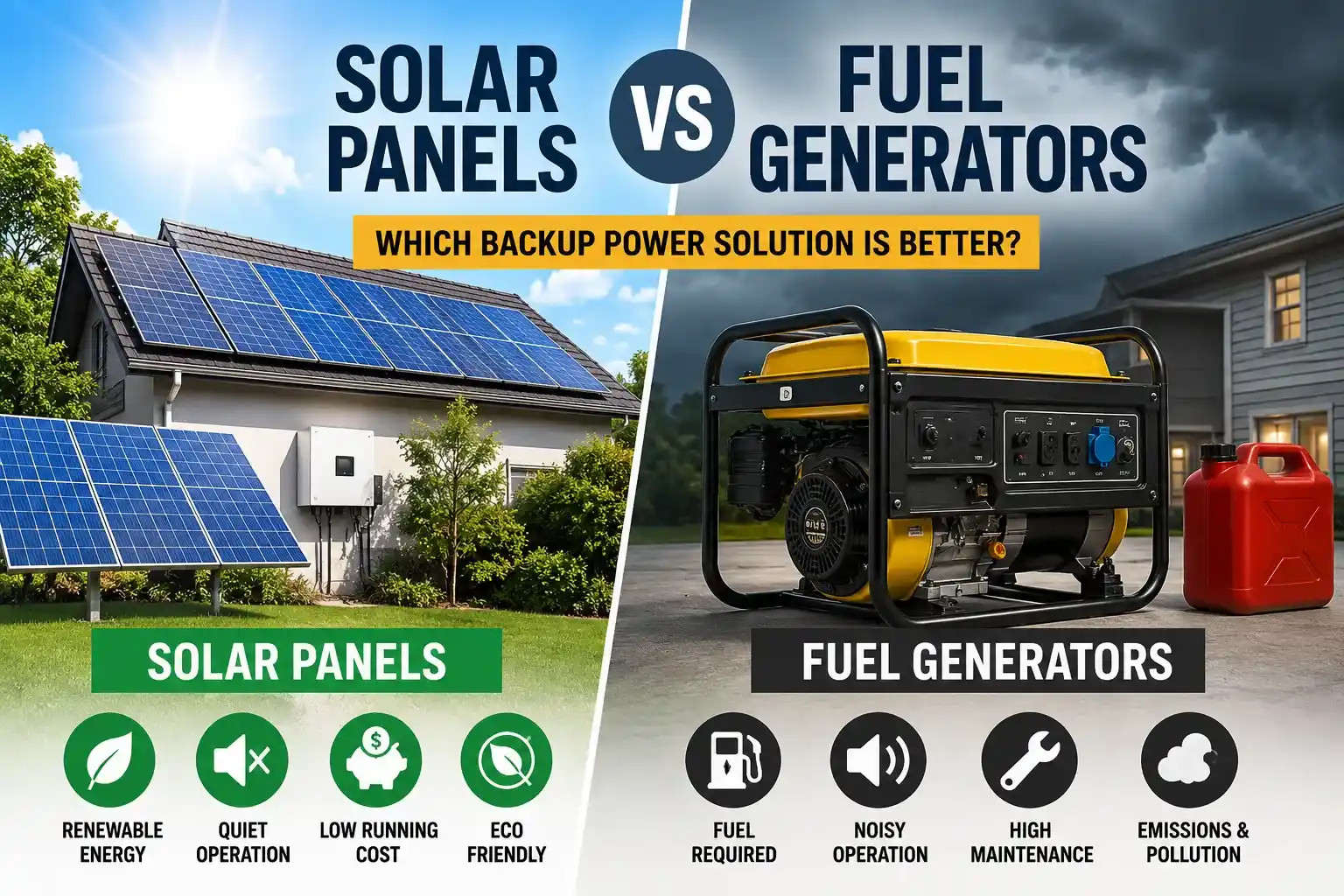
Solar Panels vs Fuel Generators: Which Is Better?: Electricity outages are becoming more common across many parts of the United States. Severe storms, hurricanes, wildfires, and aging infrastructure have encouraged homeowners to rethink their emergency preparedness strategies.
When searching for a reliable backup power solution, two options often stand out: solar panels and fuel generators.
Both technologies can provide electricity when the grid goes down, but they differ significantly in cost, maintenance requirements, convenience, and long-term value.
This guide compares solar panels and fuel generators to help homeowners understand which system may better fit their needs, lifestyle, and budget.
Why Backup Power Matters More Than Ever
For many families, losing electricity means much more than sitting in the dark.
Power interruptions can affect:
- Refrigeration
- Internet connectivity
- Medical equipment
- Home security systems
- Heating and cooling
- Remote work setups
As energy costs continue to rise, homeowners are looking for dependable solutions that provide both convenience and peace of mind.
Some people prioritize immediate emergency power, while others prefer investing in renewable technologies that may reduce long-term operating costs.
Understanding the strengths and limitations of each option can make decision-making easier.
Read Also: Energy Revolution System Review 2026 – Honest Analysis, Features & Pricing
Table of Contents
What Are Solar Panels?
Solar panels convert sunlight into electricity using photovoltaic cells.
A complete residential solar system often includes:
- Solar modules
- Inverters
- Mounting equipment
- Battery storage systems
- Monitoring software
Solar energy is considered one of the most widely adopted renewable energy sources in the world.
Modern systems can supply a significant portion of a household’s electricity needs and may continue operating during outages when paired with battery storage.
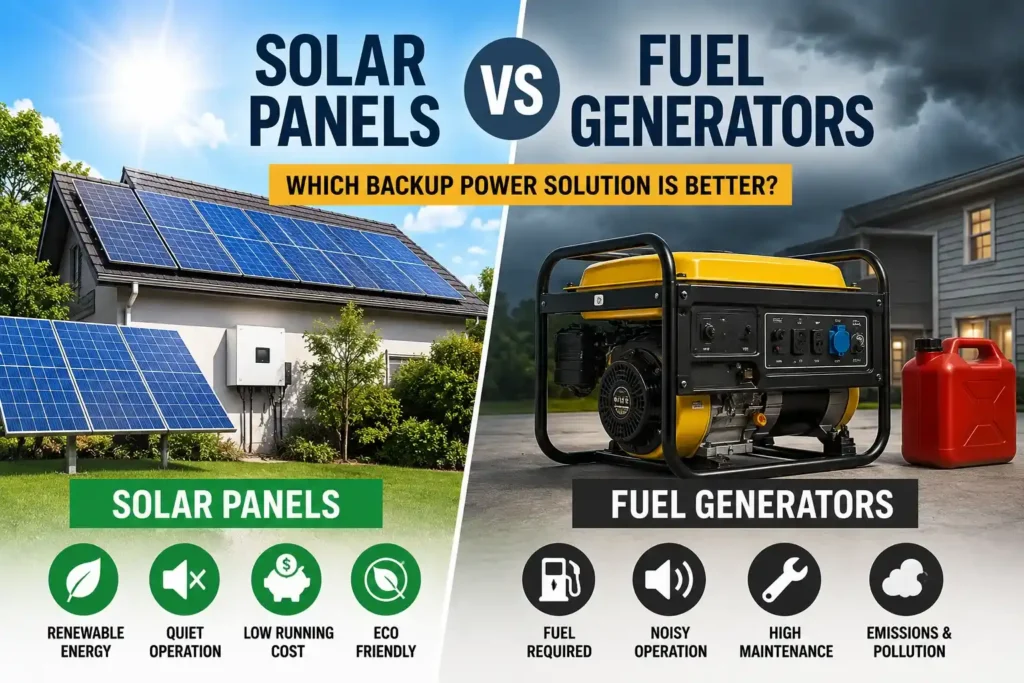
Advantages of Solar Panels
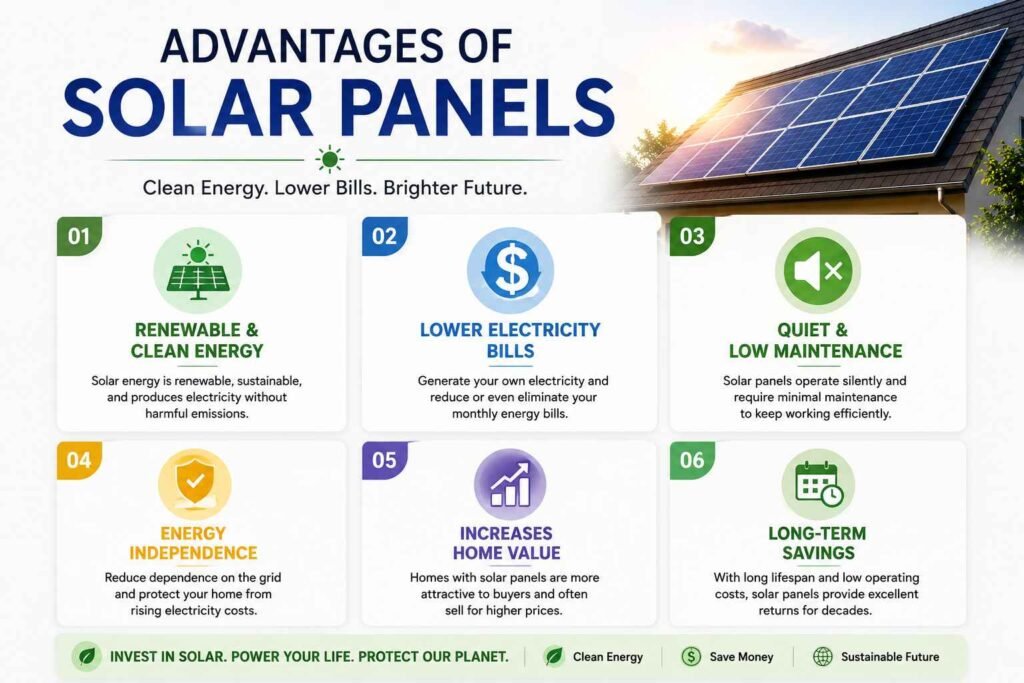
Renewable Energy Source
Solar panels rely on sunlight rather than gasoline, propane, or diesel fuel.
This allows homeowners to generate electricity without ongoing fuel purchases.
Quiet Operation
Unlike conventional generators, solar systems operate silently.
This can be beneficial in suburban neighborhoods and communities with noise restrictions.
Lower Operating Costs
Although installation costs can be substantial, long-term operating expenses are generally lower because sunlight is free.
Reduced Environmental Impact
Solar energy produces no direct emissions while generating electricity.
Many homeowners choose solar systems because they align with sustainability goals.
Drawbacks of Solar Panels
Higher Initial Investment
Complete solar installations often require several thousand dollars upfront.
Battery storage systems can further increase expenses.
Weather Dependency
Solar panels perform best under direct sunlight.
Cloudy days and winter conditions may reduce energy production.
Installation Complexity
Roof-mounted systems usually require professional installation and permits.
Read Also: Best Portable Power Stations for Home Use
What Are Fuel Generators?
Fuel generators use gasoline, propane, or diesel engines to produce electricity.
They are widely used for emergency backup power and construction sites.
Fuel generators are available in several sizes, ranging from small portable units to whole-house standby systems.
Advantages of Fuel Generators
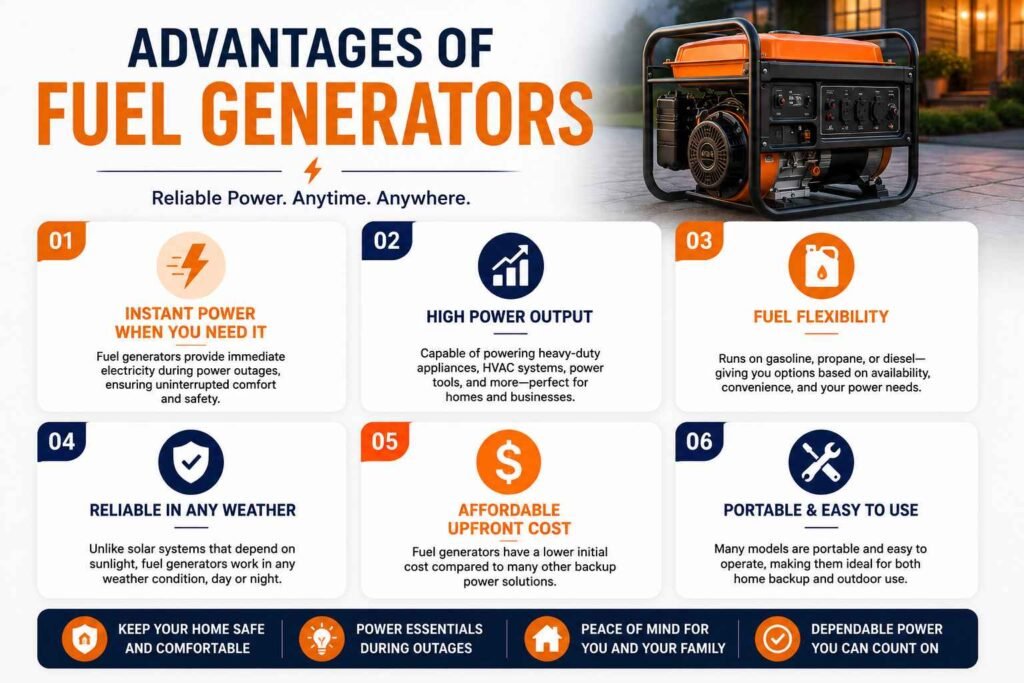
Immediate Power Availability
Generators can provide electricity almost instantly after startup.
This makes them useful during unexpected outages.
High Output Capacity
Large generators can support:
👉Refrigerators
👉Air conditioners
👉Water heaters
👉Power tools
👉Medical devices
Lower Upfront Cost
Portable generators are generally less expensive than complete solar systems.
Drawbacks of Fuel Generators
Fuel Storage Requirements
Owners must maintain an adequate fuel supply.
Gasoline can degrade over time and requires proper storage.
Noise Levels
Generators can be loud, especially larger models.
Some neighborhoods restrict their operation during nighttime hours.
Maintenance Needs
Oil changes, engine inspections, and periodic testing are necessary.
Neglecting maintenance can reduce reliability.
Solar Panels vs Fuel Generators Comparison
| Feature | Solar Panels | Fuel Generators |
|---|---|---|
| Initial Cost | High | Moderate |
| Operating Cost | Low | High |
| Fuel Required | No | Yes |
| Noise Level | Silent | Loud |
| Maintenance | Minimal | Moderate to High |
| Environmental Impact | Low | Higher |
| Emergency Power | With Battery Storage | Immediate |
| Lifespan | 20–30 Years | 10–15 Years |
| Installation | Professional | Simple |
| Portability | Limited | High |
Which Option Is Better for Homeowners?
The answer depends largely on personal priorities.
Choose Solar Panels If:
🔹 You want renewable energy
🔹 Long-term savings matter
🔹 Quiet operation is important
🔹 You plan to stay in your home for many years
Choose Fuel Generators If:
🔹 You need immediate backup power
🔹 Initial budget is limited
🔹 Outages happen infrequently
🔹 Portability is important
Portable Power Stations as a Middle Ground
Some homeowners prefer an alternative solution that combines convenience with battery technology.
Portable battery stations have become increasingly popular because they offer:
- Quiet operation
- Indoor-safe usage
- Rechargeable batteries
- Solar charging compatibility
Examples include:
✅️Jackery Explorer Series
✅️EcoFlow Delta Models
✅️Bluetti AC200MAX
Readers interested in battery-powered solutions may also enjoy our guide on Best Portable Power Stations for Home Use.
DIY Energy Projects and Learning Opportunities
Commercial backup systems prioritize convenience.
However, some homeowners are more interested in understanding how electricity works and gaining hands-on experience.
Educational projects can provide valuable insight into:
✅️Energy generation concepts
✅️Magnetic principles
✅️Power management
✅️Emergency preparedness strategies
Those interested in exploring these ideas can learn more through our detailed Energy Revolution System Review, which explains how DIY energy projects compare with commercial backup solutions.
Expert Perspective
After evaluating various emergency power systems, one conclusion becomes clear.
No single technology works perfectly for everyone.
Solar panels excel in sustainability and long-term energy production.
Fuel generators remain effective for immediate emergency situations.
Portable battery stations offer convenience.
Many preparedness-minded families ultimately combine multiple approaches.
A generator may provide emergency electricity.
Portable batteries can support smaller devices.
Learning about alternative energy concepts can help homeowners make more informed decisions in the future.
Final Thoughts
Solar panels and fuel generators each have advantages and disadvantages.
Homeowners focused on renewable energy and long-term savings may appreciate solar installations.
Families seeking affordable and immediate emergency backup power often choose fuel generators.
Others may prefer battery stations or educational projects that provide greater understanding of energy independence.
The best solution depends on your goals, location, budget, and willingness to maintain equipment.
Understanding your options today can help create a more resilient home tomorrow.
You can explore the Energy Revolution System to better understand how electricity works, take a more active role in managing your backup power needs, and gain practical knowledge that may help you troubleshoot minor issues yourself with greater confidence.
Related Tags
Solar Panels, Fuel Generators, Renewable Energy, Backup Power, Portable Power Station, Emergency Preparedness, Off Grid Living, Energy Independence, DIY Energy Projects, Home Backup Power, Portable Solar Generator, Battery Generator, Energy Revolution System, Backup Power Solutions, Solar Panels for, Home Backup, Fuel Generators for Home Use, Emergency Backup Power