When you’re on the journey to conception, it’s normal to look for signs that pregnancy has begun even before taking a test. A common question many women ask is: if pregnant will an ovulation test be positive.
Since ovulation tests and pregnancy tests measure different hormones, the answer isn’t straightforward. While ovulation kits are excellent tools for tracking fertility, they are not designed to confirm pregnancy. Still, some women notice a positive ovulation test result even after conceiving. Let’s explore why this happens and whether you should rely on it.
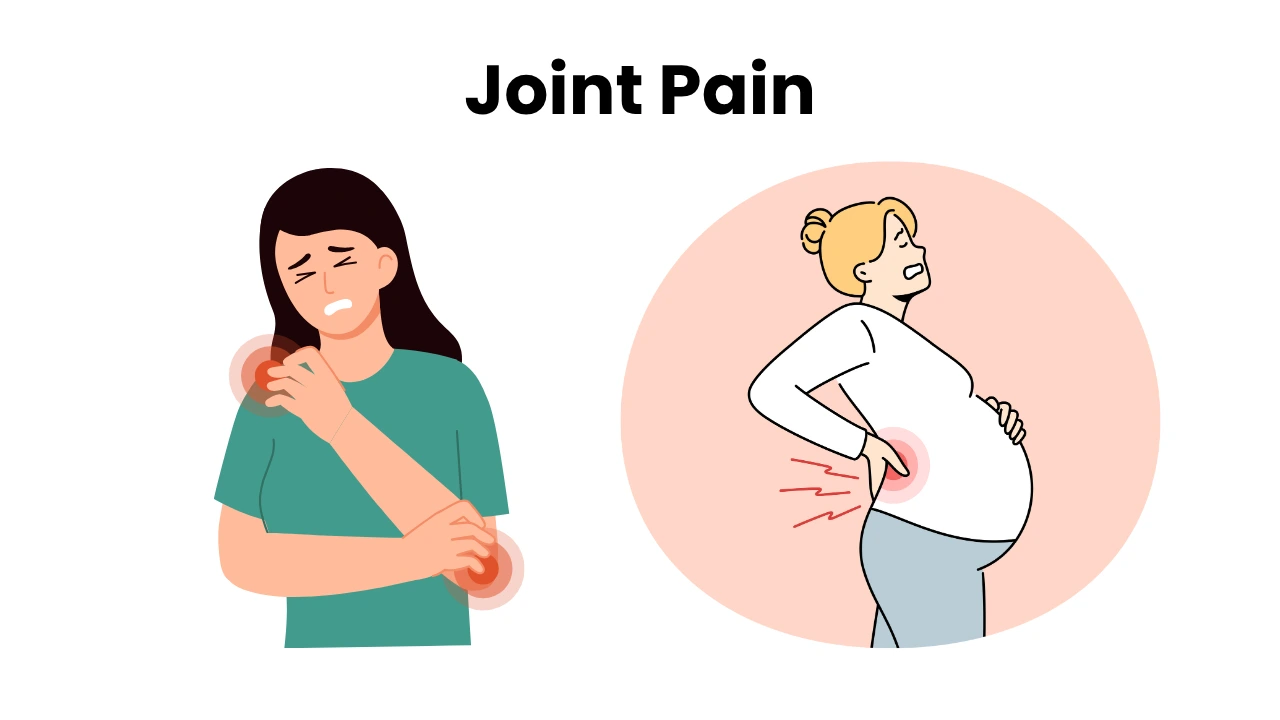
Read Also: Finger Joint Pain During Pregnancy – Full Relief Guide
Table of Contents
Are You Planning To Get Conceive
If you’re trying to get pregnant, ovulation kits (also called OPKs) may already be part of your routine. These tests detect the surge of luteinizing hormone (LH), which signals that ovulation is about to happen. Knowing your fertile days increases the chances of timed intercourse and conception.
But once ovulation has passed and you begin to wonder about pregnancy, it’s important to remember an ovulation test was not designed to detect pregnancy. For that, a pregnancy test is the most accurate tool.
The Difference Between a Pregnancy Test and an Ovulation Test
Although they may look similar, pregnancy tests and ovulation tests serve very different purposes.
- Pregnancy Test: Detects the hormone hCG (human chorionic gonadotropin), which is released after a fertilized egg implants in the uterus.
- Ovulation Test: Detects LH (luteinizing hormone), which rises before ovulation.
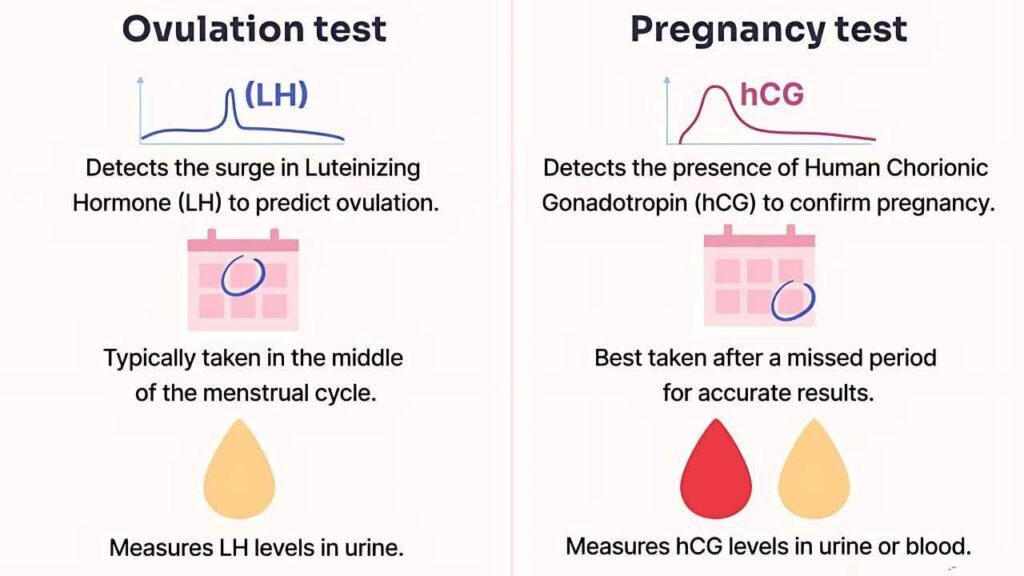
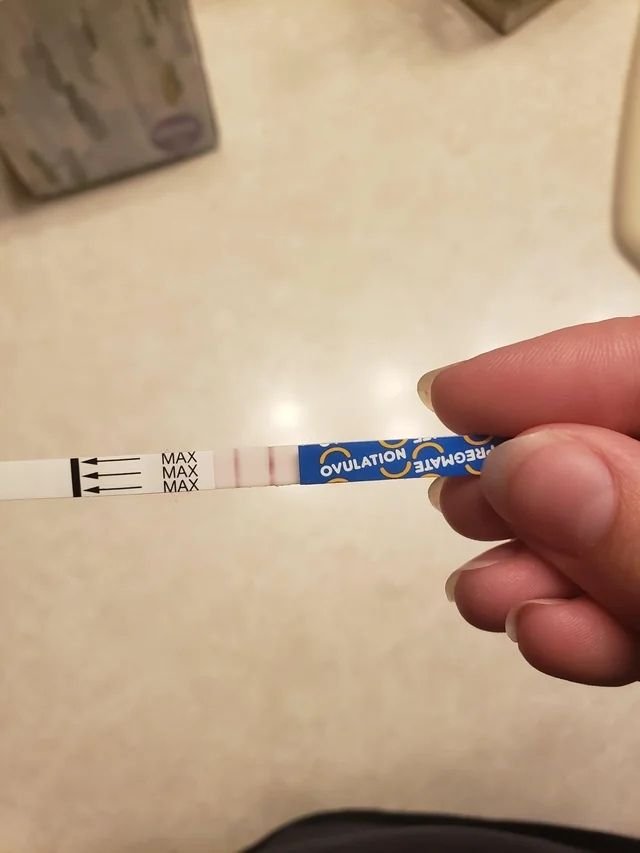
Because LH and hCG share a similar structure, there are situations where an ovulation test may show a positive result even in pregnancy. This is why some women feel that ovulation tests can (sort of) act as a pregnancy test. However, the sensitivity isn’t the same, and this can lead to misleading outcomes.
What is the Difference Between the Hormones LH and hCG
The similarity between LH and hCG explains the confusion.
- LH comes from the pituitary gland and plays a role in triggering ovulation.
- hCG is produced by the placenta after implantation and maintains early pregnancy.
Since the two hormones are structurally close, some ovulation kits react to hCG levels. This means your ovulation urine test might still show a positive result if you’re pregnant. While that sounds exciting, it isn’t a reliable confirmation method.
At What Time Should You Use an Ovulation Test for the Most Accurate Results
If you’re using ovulation tests for their intended purpose (detecting fertility):
- Test in the afternoon or evening, when LH is most concentrated.
- Begin testing a few days before your expected fertile window.
- Avoid excess fluids before testing to prevent dilution.
Once ovulation has occurred, continuing to test isn’t particularly useful. If you suspect pregnancy, switch to a home pregnancy test instead.
Can an Ovulation Test Also Pick Up Signs of Early Pregnancy
Yes, it might. Some women notice that an OPK can be positive if you’re pregnant because the test sometimes picks up hCG. But this is more of an overlap rather than an intentional feature.
The challenge is that ovulation tests are not as sensitive as an early pregnancy test. While pregnancy kits can detect very low levels of hCG within days of implantation, ovulation kits often require much higher levels of hormone before showing a line.
This is why doctors and fertility experts recommend pregnancy tests for confirmation, not ovulation kits.
Why Do Some Women Get Positive Ovulation Tests After Becoming Pregnant
It can be confusing to take a test and see a line when you’re already past ovulation. Some women report this and wonder if it’s proof of pregnancy.
The reasons include:
- Hormone Cross-Reaction: hCG sometimes mimics LH in an ovulation kit.
- Persistent Testing: Women often continue testing after ovulation and notice positives.
- Variation Between Brands: Some kits are more likely to detect hCG.
So while yes, it might happen, a proper pregnancy test remains the gold standard for accurate results.
Read Also: Is Watermelon Good for Pregnancy to Eat or Risk?
If Pregnant Will an Ovulation Test Be Positive (Key Takeaway)
The bottom line. It’s possible, but not dependable.
- An ovulation test was not designed to detect pregnancy.
- Sometimes, an OPK can be positive if you’re pregnant, but it’s coincidental.
- Ovulation tests are not as sensitive as an early pregnancy test, so they can miss early signs.
- If your period is late, the best option is always a home pregnancy test or a doctor’s blood test.
Final Thoughts
So, if pregnant will an ovulation test be positive. Sometimes, yes, it might, but ovulation kits were never meant for pregnancy confirmation. While ovulation tests can (sort of) act as a pregnancy test, they’re not sensitive enough for accurate detection.
For the most reliable results, rely on a home pregnancy test or a doctor’s advice. Use ovulation kits for what they’re best at tracking your fertile days not diagnosing pregnancy.
This article is for informational purposes only and should not replace medical advice. Always consult a qualified healthcare professional for personalized guidance regarding pregnancy or fertility concerns.
FAQs
Can a faint line on an ovulation test mean pregnant?
Not necessarily. A faint line usually shows low LH. In some rare cases, hCG in pregnancy may trigger it, but it’s not reliable.
How do I know I have conceived immediately after ovulation?
You can’t know immediately. Fertilization happens quickly, but only after implantation (6–12 days later) does hCG rise enough to be detected.
What does it mean when a pregnancy test has two lines but one is very light?
Even a light second line usually indicates pregnancy. Retesting after 48 hours often gives a clearer result.
How long does it take for sperm to reach the egg while ovulating?
Sperm can reach the fallopian tube within minutes to a few hours after intercourse.
What are the signs that an egg has been fertilized?
Some women experience spotting, cramping, or breast tenderness, but only a pregnancy test can confirm fertilization and implantation.
Can you get piercings during pregnancy?
It’s not recommended due to infection risks and slower healing during pregnancy.